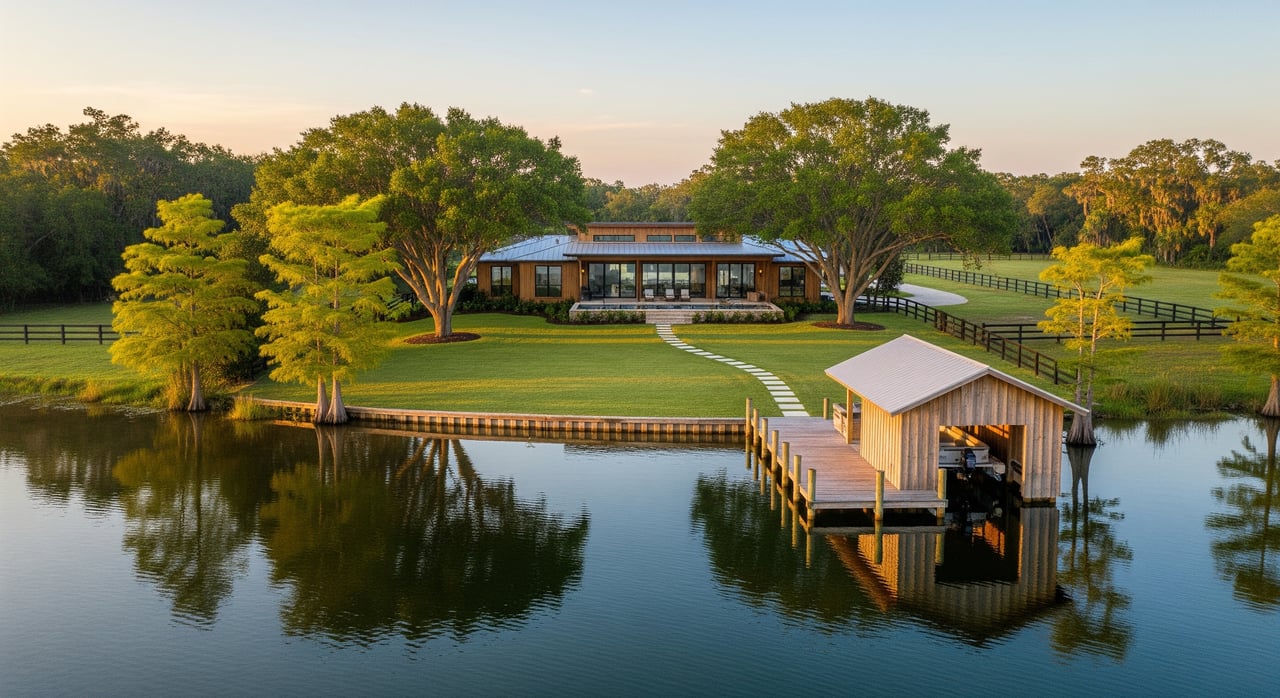
Looking for more space without leaving Melbourne’s convenience behind? If Lake Washington acreage is on your radar, you’re not alone. Many buyers want privacy, room for a shop or pool, and the option to build custom. You also want to avoid surprises with utilities, permitting, and timelines. In this guide, you’ll learn how to compare acreage to standard lots, what drives prices and days on market, and the key checks to run before you write an offer. Let’s dive in.
Why Lake Washington acreage is different
Acreage near Lake Washington is a niche inside the broader Melbourne market. You’ll see fewer listings, more variation in lot characteristics, and timelines that depend on site feasibility as much as price.
Scarcity and inventory
- What to track: active inventory and months of supply for lots above 0.5 acre, 1.0 acre, and 2.0 acres.
- Why it matters: acreage is a small slice of total listings, so a handful of new properties can move pricing and days on market in a way you don’t see in denser neighborhoods.
- How to measure: use MLS filters by lot size and a simple distance band around Lake Washington, then compare to Melbourne’s citywide metrics and a dense-neighborhood subset.
Pricing and the lot-size premium
Acreage value is not just about total land. The market prices a blend of structure, lot size, and location. To understand what you’re paying for:
- Compare median sale price, price per finished square foot, and price per acre for recent acreage sales.
- Run paired comparisons of similar homes that differ mainly by lot size or proximity to the lake or park. The difference helps estimate the land premium.
- Remember special cases. Waterfront lots or parcels with direct park access often carry additional premiums beyond raw acreage.
DOM and timelines
Expect days on market to behave differently on acreage. Buyer pools are smaller and due diligence is more complex. In tight inventory periods, well‑priced acreage can still move quickly. Plan for longer end‑to‑end timelines if you need septic approvals, utility extensions, or construction financing.
How to size the lot premium
Define your acreage bands
Start with clear thresholds: 0.5 to 1.0 acre for privacy and a larger yard, 1.0 to 2.0+ acres for a more rural feel. Set your search to both bands so you can see how price steps up between them.
Compare like with like
When you look at pricing, control for living area, age, bed/bath count, and condition. If two homes are similar but one sits on an acre while the other sits on a smaller lot, the price gap helps estimate the acre premium. A simple paired‑sales approach or basic spreadsheet regression gives you a grounded number rather than a guess.
Isolate location effects
Lots directly on the lake or with trail or park adjacency often command separate premiums. Flag these attributes in your comparisons so you don’t overgeneralize the land value for non‑waterfront parcels.
Timeline and cost drivers to vet early
Acreage purchases succeed when you verify site details up front. The checks below can save you time, money, and stress.
Utilities and service status
- Confirm whether the parcel has City of Melbourne water and sewer, or if it requires a well and septic system. Utility status affects feasibility and total cost.
- Ask for utility maps and any prior tap or capacity confirmations.
- If on septic, understand where a drainfield can go and how that footprint affects where you can place the house, pool, or future outbuilding.
Zoning, setbacks, and subdivision potential
- Verify zoning, minimum lot size, setbacks, and rules for accessory structures.
- If you hope to split the parcel later, confirm subdivision potential and process early. Lots that allow subdivision or flexible accessory structures often trade at a premium and can expand your exit options.
Environmental, flood, and wetlands
- Check FEMA flood zone designations to understand insurance needs and lender requirements.
- Review county GIS layers for wetlands, soils, and any conservation easements.
- If wetlands are present, be realistic about buildable area and permitting timelines, especially near lakefront or canal corridors.
Road access and easements
- Confirm whether access is via a paved public road or a private or unimproved road.
- Verify recorded access and maintenance easements for flag lots or long driveways.
- Access and maintenance terms can affect insurability, year‑round access, and financing options.
Financing, inspections, and insurance
Buying acreage can involve different underwriting, inspections, and policies than a standard neighborhood home. Plan for the following.
Financing paths
- Traditional mortgages usually require a dwelling as collateral.
- If you are buying land to build, explore construction loans with staged draws and lender inspections.
- Work with lenders who regularly finance Brevard County acreage and understand local utility and septic realities.
Feasibility and due diligence
Build the right contingencies into your offer. Common items include:
- Boundary survey and title review to confirm parcel lines and easements.
- Septic feasibility or perc testing if not on sewer.
- Soils evaluation if you plan a large foundation or a well.
- Utility confirmations for water, sewer, or power runs.
- Tree and vegetation review to understand removal limits, mitigation, and neighbor boundaries.
Allow extra time in contingency windows, especially if wetlands or complex soils are in play.
Insurance realities
- Flood insurance may be required if any structures are in FEMA‑mapped flood zones.
- Wind and homeowners insurance can differ for acreage properties with outbuildings or larger footprints.
- Price policies during feasibility so you can compare true ownership cost across options.
Data checklist for your search
Use your agent’s MLS tools to build a clear picture of the Lake Washington acreage segment. Helpful filters and metrics include:
- Lot size ranges: 0.5 to 1.0 acre, 1.0 to 2.0 acres, and 2.0+ acres.
- Distance to Lake Washington: within 0.5 mile and 0.5 to 1.0 mile bands.
- Status: active, pending, and sold within the last 6, 12, and 24 months.
- Fields to export: list price, sale price, sale date, days on market, living area, year built, beds and baths, lot size, waterfront or water access flag, and parcel ID.
- Metrics to compute: median sale price by lot‑size band and distance band, price per finished square foot, price per acre, sale‑to‑list ratio, share of price reductions, months of inventory, and DOM by lot‑size band.
Buyer playbook: offers and negotiation
Typical tradeoffs
- What you gain: privacy, outdoor space, and room for a shop, garage, or pool.
- What you manage: more yard upkeep, potential septic or well complexity, and longer permitting for custom work.
- For custom‑home plans: site orientation, stormwater management, tree preservation, and septic layout are early design drivers.
Negotiation levers
- Ask for recent surveys, septic or perc documentation, and any approved site plans to reduce uncertainty.
- Use DOM and seasonal patterns to negotiate price or concessions when inventory builds.
- If building, consider offer terms tied to construction‑loan approval and feasibility milestones.
Documents to request
- Current boundary survey and title commitments.
- Zoning and future land use designations.
- Sewer or septic documentation and utility hookup locations and costs.
- Any recorded easements or covenants.
- FEMA flood zone certificate and any wetland reports.
- Vegetation or tree surveys if mature trees are part of the value.
Melbourne vs. Lake Washington: how to compare
To make a confident decision, stack Lake Washington acreage against denser Melbourne neighborhoods using the same yardsticks:
- Benchmark median sale price and price per square foot for similar home sizes.
- Track months of inventory and median DOM by lot‑size band.
- Note the sale‑to‑list price ratio and the share of homes selling over list in each segment.
- Separate lake‑adjacent properties from non‑waterfront acreage to isolate the location effect.
A side‑by‑side snapshot makes it clear what you pay for land, how quickly homes move, and where negotiation room may exist.
A smoother path with local expertise
Acreage around Lake Washington rewards careful planning. When you have a team that understands construction, mortgage options, site feasibility, and negotiation, you move faster and avoid preventable surprises. With boutique, concierge‑level service supported by a proven marketing and transaction platform, you get clarity from search to close and beyond.
Ready to evaluate specific parcels or size the lot premium for your goals? Connect with the DeRoy Thornton Group for a tailored acreage strategy and neighborhood‑level guidance. Get Your Free Home Valuation or schedule a buyer consult to start smart.
FAQs
How do prices on Lake Washington acreage compare to standard Melbourne lots?
- The premium depends on lot size, waterfront or park proximity, and utility status. Compare similar homes and use paired‑sales to isolate how much of the price is tied to land.
Will building on an acreage lot near Lake Washington take longer?
- Often yes. Septic feasibility, permitting, site prep, and construction financing steps add time. If city utilities are available, timelines can shorten.
What utilities should I confirm before making an offer on acreage?
- Verify water and sewer availability through the city, or plan for well and septic. Confirm hookup locations, capacity, and any extension costs in writing.
Are there special flood or environmental risks around Lake Washington?
- Some parcels intersect FEMA flood zones or local wetland areas. Always check flood maps, county GIS layers, and any conservation or shoreline rules that affect buildable area.
How is financing different for land or custom builds in Brevard County?
- Vacant land and construction loans use stricter underwriting and staged draws. Work with lenders experienced in local acreage to align terms with your build plan.
What inspections and studies should I include when buying acreage?
- Typical contingencies include a boundary survey, title review, septic or perc test, soils evaluation, utility confirmations, and tree or vegetation assessments.
