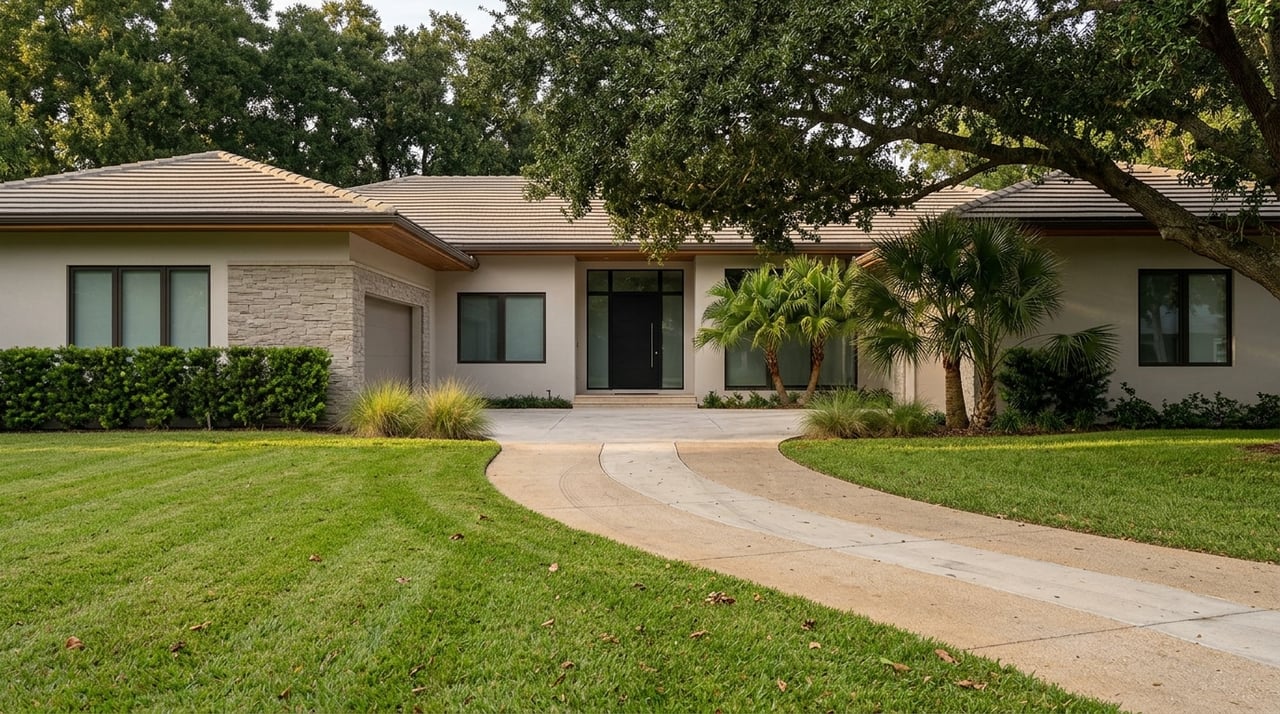
Dreaming of more land, more privacy, and room to spread out near Melbourne? Lake Washington acreage living can offer exactly that, but it comes with a very different day-to-day rhythm than a typical neighborhood. If you are considering a larger parcel in this part of Brevard County, it helps to understand how the lifestyle, zoning, upkeep, and outdoor access all fit together before you buy. Let’s dive in.
What daily life feels like
Life around the Lake Washington Road and Stewart Road area tends to feel quiet, spread out, and car-centered. Walk Score rates this pocket at 22 out of 100, which means most errands require a car, and it estimates about a 16-minute drive to Downtown Melbourne.
That matters because acreage living here is not the same as living in a walkable subdivision. While there are nearby bus lines, the area still functions much more like a drive-everywhere location, and bike infrastructure is limited.
For many buyers, that tradeoff is part of the appeal. You are often choosing more space, more separation from neighbors, and a more rural feel while still staying within reach of everyday needs in Melbourne.
Why buyers choose Lake Washington acreage
The biggest draw is often space you can actually use. Instead of a compact homesite, you may find room for outbuildings, personal agricultural uses depending on zoning, equipment storage, or simply a quieter setting with more distance between homes.
The outdoor side of the lifestyle is another major reason buyers look here. Lake Washington Park on Lake Washington Road includes a two-lane motorized boat ramp, an airboat launch area, a 120-foot fishing pier, pavilions, a playground, and restrooms, which gives the area a strong connection to freshwater recreation.
You are also near Wickham Park, a 391-acre regional park with walking and biking paths, disc golf, a dog park, hiking and biking trails, equestrian trails, fishing lakes, and camping. In practical terms, Lake Washington living is often about more than a big yard. It can also mean easier access to boating, fishing, and open-air recreation.
Lake Washington zoning basics
AU and RR-1 zoning
Acreage properties around Lake Washington may fall under zoning categories such as AU (Agricultural Residential) or RR-1 (Rural Residential). According to Brevard County zoning documentation, AU has a 2.5-acre minimum lot size, while RR-1 has a 1-acre minimum lot size.
Those categories shape what the land may support. County records describe RR-1 as a single-family district that can allow agricultural uses on a personal level and horses on certain acreage, while AU is more agriculture-oriented and allows farm animals and agricultural commercial uses.
That zoning mix is one reason buyers often see larger-lot homes, custom homes, and parcels that may work for horses or hobby-farm-style use. Still, the exact allowed use depends on the specific parcel and any applicable conditions, so it is important to verify details before making assumptions.
Can you have horses or farm animals?
Sometimes, yes. In this area, that depends on the parcel’s zoning and any special conditions tied to the property.
If horses or other agricultural uses are part of your plan, you will want to confirm the current zoning classification, minimum acreage standards, and any parcel-specific restrictions early in the process. This is one of those areas where careful due diligence matters.
Bigger lots mean bigger upkeep
Privacy is one of the biggest benefits of acreage living, but it usually comes with more hands-on maintenance. A larger property may mean more mowing, more pruning, more irrigation management, and more routine landscape work.
UF/IFAS notes that Florida landscape care often involves fertilization, pruning, mowing, and irrigation. It also points to Florida-Friendly Landscaping practices as a way to reduce maintenance while lowering water, fertilizer, and pesticide use.
That can be a helpful mindset if you want land without creating a full-time yard project. The right landscaping approach can make a large parcel feel more manageable over time.
Well and septic responsibilities
Some acreage properties may rely on private well and septic systems rather than central utilities. If that is the case, the day-to-day responsibility shifts more directly to you as the homeowner.
The Florida Department of Health recommends testing private wells for bacteria and nitrate at least once a year. For septic systems, the homeowner is responsible for upkeep, and inspections are generally recommended every 1 to 3 years, with pumping every 3 to 5 years.
These are not necessarily deal breakers. They are simply part of understanding the true ownership experience before you buy.
Mosquito control matters
On larger parcels, especially in Florida, outdoor comfort depends partly on how well the property is maintained. Brevard County Mosquito Control advises residents to eliminate standing water and offers site visits for breeding-site checks.
That guidance is especially important if the property includes areas where water can collect. County guidance also notes that mosquito-season management matters for horse owners, which is worth knowing if equestrian use is part of your plan.
Environmental rules are a real factor
Lake Washington-area parcels sit in a sensitive environmental setting, and that affects how land can be used. County ordinances state that Lake Washington Area rules apply to unincorporated parcels within two miles of Lake Washington, west of I-95, and within the St. Johns River floodplain.
For buyers, that means wetlands, buffers, drainage, and parcel jurisdiction should all be reviewed carefully. These are not minor details on acreage property. They can influence what you can build, where you can place improvements, and how the land functions during wet periods.
This area is also handled carefully because Lake Washington plays an important role in local water supply planning. Brevard County notes that utilities in the area draw and treat groundwater as well as surface water from Lake Washington and Taylor Creek Reservoir.
Verify city or county jurisdiction
One detail buyers sometimes miss is jurisdiction. Some Lake Washington addresses may fall inside Melbourne, while county rules apply to unincorporated parcels near the lake.
That means you should confirm the exact parcel jurisdiction rather than assuming the property follows subdivision-style standards. On acreage, those distinctions can affect expectations around permitting, land use, and future plans.
What to verify before you make an offer
Acreage purchases can be rewarding, but they also call for a more detailed review than a standard neighborhood home. Before you move forward, it helps to confirm the basics tied to land use, utilities, and future flexibility.
Here are some of the main items to verify:
- Current zoning classification
- Minimum lot size rules tied to that zoning
- Whether horses or other agricultural uses are allowed
- Floodplain and wetland restrictions
- Drainage conditions on the parcel
- Whether the property uses central utilities, a private well, or septic
- Whether any agricultural tax classification actually applies
- Whether future plans to split land, rezone, or seek a variance would require hearings, a survey, and a legal description
If you are buying with a long-term vision, these checks can save time and frustration later. They also help you understand whether the property truly fits your lifestyle goals.
Agricultural zoning is not the same as tax classification
This point often surprises buyers. In Brevard County, agricultural zoning does not automatically mean the property receives agricultural classification for tax purposes.
According to the Brevard County Property Appraiser, agricultural classification applies only to commercial agricultural operations, and residences or other non-agricultural buildings are excluded. If tax treatment is part of your decision-making, this is something to review carefully before closing.
Changing the property later may take time
If you are thinking ahead to splitting land, rezoning, or requesting a variance, the process is not instant. Brevard County states that zoning actions require at least two public hearings, and the variance or rezoning process relies on a legal description and a survey.
That does not mean future changes are impossible. It just means you should approach any acreage purchase with a clear picture of what is currently allowed versus what might require approvals later.
Is Lake Washington acreage living right for you?
If you want walkability and quick access to nearby errands on foot, this area may feel too spread out. But if your priorities include land, privacy, room for custom living, and access to outdoor recreation, Lake Washington can be a compelling option.
The key is to go in with clear expectations. Acreage living here can be rewarding, but it tends to work best for buyers who value space and flexibility enough to take on the added maintenance, utility review, and land-use due diligence that come with it.
When you want help evaluating lot potential, zoning details, or the day-to-day realities of owning acreage near Lake Washington, the DeRoy Thornton Group is here to guide you with local insight and concierge-level support.
FAQs
How far is Lake Washington acreage from Downtown Melbourne?
- A central location near Lake Washington Road and Stewart Road is about a 16-minute drive to Downtown Melbourne, according to Walk Score.
Can Lake Washington acreage properties allow horses?
- Sometimes. Brevard County records indicate RR-1 can allow horses on certain acreage, while AU is more agriculture-oriented, so the answer depends on the parcel’s zoning and conditions.
Do Lake Washington acreage homes use wells and septic systems?
- Some do. If a property is not on central utilities, private well testing and septic maintenance become homeowner responsibilities.
What should buyers verify on a Lake Washington acreage lot?
- Buyers should confirm zoning, floodplain and wetland restrictions, utility type, agricultural tax classification, and whether future changes like a split, rezoning, or variance would require hearings or a survey.
Does agricultural zoning in Lake Washington lower property taxes automatically?
- No. In Brevard County, agricultural zoning does not automatically create agricultural classification for tax purposes.
Is Lake Washington acreage living walkable for daily errands?
- Not typically. This area is considered car-dependent, so most errands are likely to require a drive.
