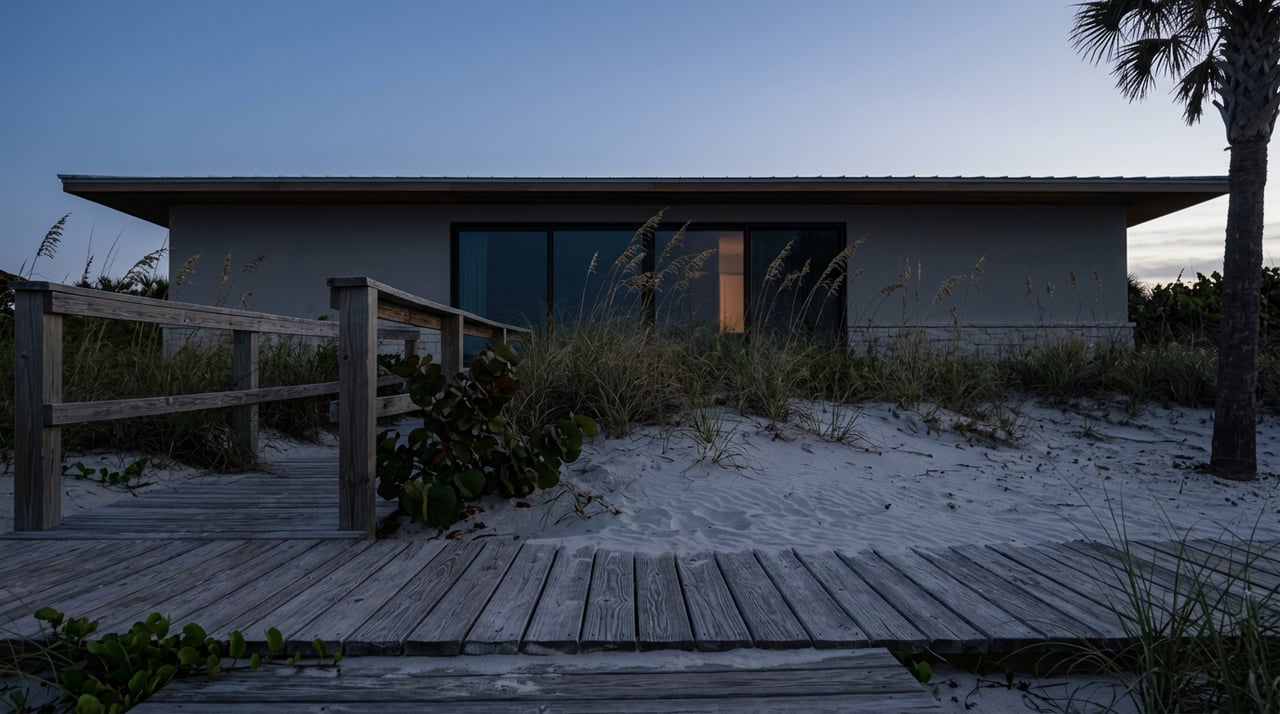
Walk the sand between Ryckman Park and Coconut Point Park at sunrise this week and you will notice something that was not there in June. The stake markers are still standing, rows of them, yellow tape fluttering in the onshore breeze. But now there are tracks running the other direction too, small tire-tread trails leading from the dune line down to the water, crossing over each other where a dozen hatchlings scrambled for the surf sometime after midnight. Most people who visit Melbourne Beach in the spring hear about nesting season and assume that is the whole story. It is not. Nesting is the setup. August is the payoff, and this year the payoff is bigger than almost anyone expected.
Why August, Not June, Is the Month That Actually Matters
Sea turtle eggs need roughly two months underground before they are ready to hatch. A nest laid in Melbourne Beach in mid-June is due to hatch right around now, in the second half of August, and a nest laid in July is due in September. That means the loggerhead and green turtle nests that went into the sand during the heaviest part of this year's nesting push are cracking open on the exact stretch of beach residents walk every morning between Labor Day and the first cold front. Nesting season gets the local news coverage every spring because it is visible and dramatic, a 300-pound loggerhead hauling herself up the beach at night. Hatching season is quieter and happens mostly before sunrise, which is probably why fewer people outside Melbourne Beach realize it is even happening. If you live here, it is the reason your beach looks different right now than it did in April.
This Year's Numbers Are Not a Normal Year
The reason this August has more to watch than most is that 2026 has been an unusually productive nesting year on Brevard County beaches. Spectrum News reported in mid-June that researchers were tracking well ahead of both last year's pace and the longer-term average. Joel Cohen of the Sea Turtle Preservation Society put it plainly to reporters:
"We are definitely ahead of last year, and really the last 5-to-10-year average."
Last year alone, researchers with the Sea Turtle Preservation Society logged roughly 20,000 green turtle nests and 10,000 loggerhead nests across Brevard beaches, itself a record at the time. Space Coast beaches are estimated to account for about a quarter of the entire world's loggerhead sea turtle population, which is not a small claim for a stretch of coastline most people drive past without a second thought. If 2026 is genuinely running ahead of that baseline, the practical effect for anyone living along A1A this month is more nests hatching per week than a typical August, more tracks on the sand at sunrise, and more reason to take the lighting rules seriously than in a slower year.
The Reason Your Neighbor's Porch Went Dark
Hatchlings do not use GPS. They orient toward the brightest, lowest part of the horizon, which on a natural beach is moonlight and starlight reflecting off the open water. Any artificial light source on land, a porch fixture, a streetlamp, a lit window, competes with that signal and can pull hatchlings inland toward roads, pools, and parking lots instead of the surf. That is the entire reason Melbourne Beach enforces a lighting rule during nesting season that runs from May through October. Ashley Chelberg, president of Stella Maris Environmental Research, has been blunt about how strict the rule actually is: even red-tinted lights count as artificial light under the town's ordinance and can draw a citation if used on the beach at night. It is not a suggestion tucked into a homeowners association newsletter. It is enforced.
What that looks like in practice, if you have not lived through a full season yet:
- Curtains or blinds drawn in oceanfront and near-oceanfront rooms after dark
- No flashlights or phone lights carried onto the sand at night, red light included
- Any hole dug during the day filled back in before dark, since an unfilled hole can trap a hatchling headed for the water
- Sandcastles knocked down before nightfall for the same reason
None of this is hypothetical caution. It is the accumulated result of decades of watching what happens when the rule is ignored.
Forty Years of Watching the Same Stretch of Sand
The Sea Turtle Preservation Society marked its 40th year of operation in 2026, and the origin story explains why Melbourne Beach treats this so seriously. In the early 1980s, founder Peter Bandre came across dozens of dead hatchlings in a beachside parking lot, lured off course and away from the water by the lights of a nearby boardwalk. That discovery led to the organization's founding in 1986 and to the nest-monitoring and lighting-education work that continues on this same beach today. The stake markers you see near Ryckman Park and further south are placed by STPS volunteers who walk this stretch of sand at dawn, count new nests, and flag them so beachgoers and beach equipment stay clear. It is a small, mostly volunteer operation with an outsized footprint, run out of a modest office on South Miramar Avenue in Indialantic, and it has been doing this work longer than most of Melbourne Beach's current residents have lived here.
Where to Actually Watch It Happen
The responsible way to experience hatching season is not a nighttime beach visit with a flashlight. It is a sunrise walk, when hatchling tracks from the previous night are still visible in the sand and the turtles themselves are long gone. Coconut Point Park is the spot most local guided walks use as a starting point, and it sits close enough to the Archie Carr National Wildlife Refuge, which stretches for roughly 20 miles down this stretch of coast and is widely regarded as the most important loggerhead nesting habitat on Earth, that a short walk south from the park puts you inside some of the most active nesting density on the entire Atlantic coast. If you want to report an exposed nest or an injured turtle, the Sea Turtle Preservation Society's Indialantic office is the local point of contact, a few minutes north of Melbourne Beach proper.
The Walk Back Up Ocean Avenue
Part of what makes this season feel like a neighborhood event instead of a nature documentary is what happens after the walk. Rockies Cafe on Ocean Avenue opens early and has become the informal debrief spot for anyone who just spent sunrise looking for turtle tracks, a family-run coffee stop with breakfast burritos and smoothies for the walk back to the car. Nearby, Sundaes on the Beach and Beachside Creamery both do a steady morning trade in the kind of soft serve and Hershey's hand-dipped cones that make more sense at 8 a.m. in August than they should. None of this is dramatic. It is just what a Tuesday morning actually looks like here in the back half of summer, and it is the part of hatching season that never makes it into the wildlife-tourism write-ups.
What This Actually Means
The generic version of this story treats Melbourne Beach's turtles as scenery, a nice fact to mention alongside the surf shops and the sunrise photos. The real version is that this town organizes a meaningful part of its late summer around an ecological event most of the country only reads about, and that in a year Brevard researchers are calling one of the strongest on record, the evidence of that is unusually visible on the actual sand people walk every day. That is worth knowing whether you have lived here five years or five months, because it explains the porch lights, the stake markers, and why your neighbor stopped leaving the patio string lights on after Labor Day.
If you are ever curious what a stretch of sand like this is actually worth, or you are weighing a move to be closer to mornings like this one, DeRoy Thornton Group knows this beach the way locals do. Reach out any time for a free home valuation grounded in what is actually happening on the ground here, not just the comps.
